11 Nov 2026
Regulatory Landmarks That Redefined Participation in Promotional Chance Events
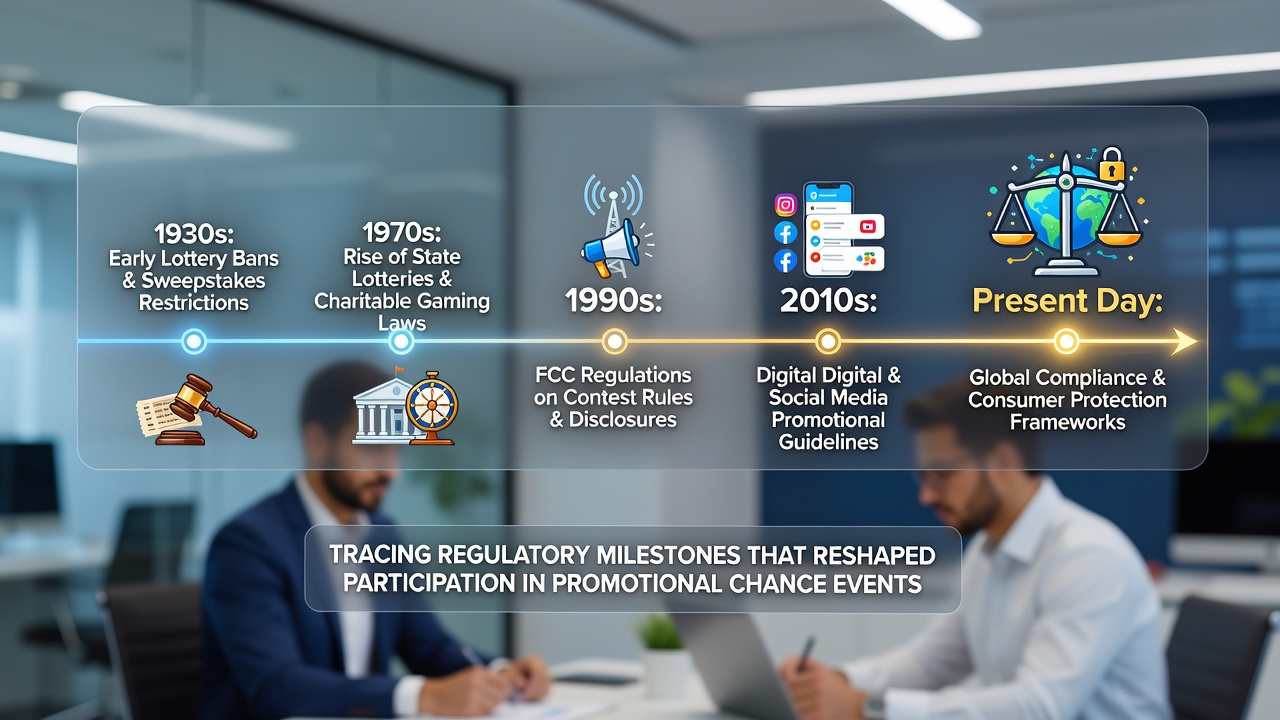
Regulatory frameworks for promotional chance events have evolved through distinct phases, each one reshaping how companies design contests, how participants engage, and how oversight bodies enforce compliance across different jurisdictions. Early 20th-century laws focused primarily on distinguishing legitimate promotions from illegal lotteries, and those distinctions set the foundation for later rules that addressed disclosure, eligibility, and prize distribution.
Foundational Rules from the Mid-1900s
The United States Federal Trade Commission established core advertising standards in the 1950s and 1960s that required sponsors to reveal material terms before participants entered, which forced marketers to adjust entry mechanisms and reduced complaints about hidden restrictions. These standards coincided with similar efforts in Canada, where provincial authorities clarified that skill-based elements could exempt certain contests from gambling statutes, thereby opening pathways for national campaigns that previously operated only in limited regions. Observers note that participation rates climbed steadily once companies published clear rules, because potential entrants felt more confident that outcomes would be fair and prizes would actually be awarded.
Digital Expansion and Updated Disclosure Requirements
By the 1990s, the rise of online entries prompted regulators to revisit older statutes, and the European Union introduced directives that standardized consumer protections for distance contracts including chance promotions. Those directives required prominent display of terms on digital platforms, which in turn prompted organizers to simplify language and create uniform entry pages across member states. Data from industry reports indicate that entry volumes increased in markets where such clarity became mandatory, since users encountered fewer barriers when reviewing eligibility and odds. In Australia, parallel updates from the Australian Competition and Consumer Commission emphasized geographic restrictions and age verification, measures that redirected promotional budgets toward compliant digital tools rather than broad print advertising.
Adjustments in the 2010s and Data Privacy Integration
The 2010s brought privacy considerations into the regulatory mix, and several jurisdictions linked data-handling rules directly to promotional entries. Canada’s Competition Bureau issued guidance that tied personal information collection to contest rules, requiring explicit consent language that many sponsors had previously omitted. This linkage altered participation patterns because entrants now weighed privacy trade-offs before submitting information, and some campaigns reported modest declines in submissions until simplified consent flows were introduced. Meanwhile, research compiled by academic centers tracking consumer behavior showed that transparent data policies correlated with higher repeat engagement across multiple events.
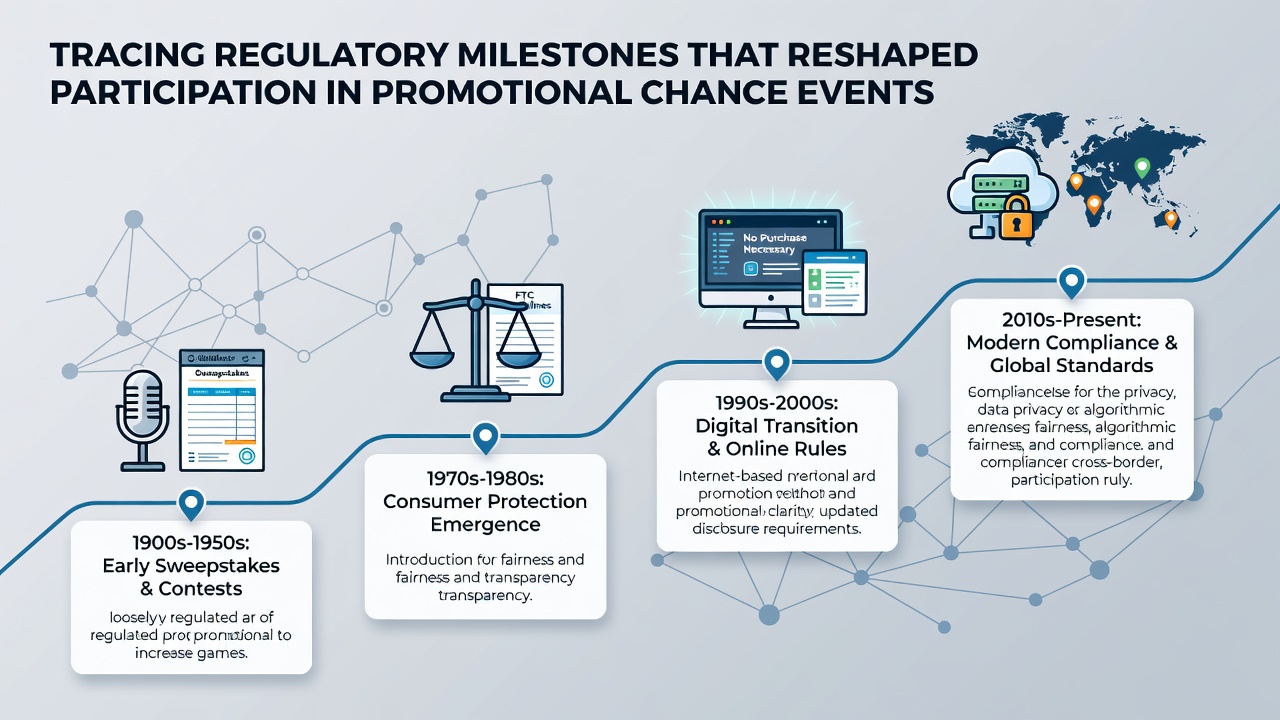
By 2023, several jurisdictions had aligned contest rules with broader digital services legislation, creating a more cohesive environment for cross-border promotions. Sponsors responded by building centralized compliance systems that could adapt to differing regional requirements without redesigning each campaign from scratch. Figures released by trade associations reveal that such systems reduced administrative costs and allowed smaller brands to enter markets that had previously seemed too complex.
Developments Approaching November 2026
Looking toward November 2026, amendments under consideration in multiple regions focus on artificial intelligence-assisted winner selection and real-time auditing of random draws. These proposals aim to codify technical standards already adopted voluntarily by large platforms, which could standardize verification processes and further influence participation by increasing perceived legitimacy. Experts tracking these proposals report that early adoption of similar standards in pilot programs produced measurable upticks in entry rates among demographics that had previously expressed skepticism about automated systems.
Conclusion
Each regulatory milestone has cumulatively altered the mechanics of promotional chance events, from entry methods and disclosure practices to data handling and technological verification. Participation patterns have shifted in response to these changes, with clearer rules generally supporting broader engagement while added compliance layers have sometimes required sponsors to refine campaign structures. The trajectory through November 2026 suggests continued integration of technical standards that may further standardize how such events operate across borders.